
What is Podiatry?
Podiatry is the term now being used when talking about foot care in the UK and is replacing the term chiropody. The change was made due to a variation in qualifications for a chiropodist.
A podiatrist studies for a minimum of 3 years before qualifying with a BSc in Podiatric studies. From then onward they agree to a minimum of 35 hours of continual professional development every year. This ensures that they keep up to date with current practices. Checking that your podiatrist is HCPC registered will provide assurance of the quality of training received. Helen and Heel and Sole Podiatry are fully qualified and HCPC registered.
- Podiatrists assess, diagnose and treat conditions of the foot.
- When the foot hurts, ordinary day to day moving around can become really tiresome.
- Pain can range from annoying discomfort to very debilitating. Overtime this can have a huge impact on both physical and mental well being.
- A Podiatrist treating skin and nail problems can make a dramatic improvement to pain straight away by removing pressure caused by a nail, corn or hard skin. They will be able to offer advice on how to manage or in some cases prevent problems re-occurring.
Other common foot problems which may need Podiatry treatment and advice are:
verruca, athletes foot, blisters, chilblains, hammer toes and regular nail cutting.
Underlying medical conditions such as Diabetes, Rheumatoid Arthritis, Osteoarthritis and increasing age mean the foot is more susceptible to developing problems and need extra care.
Podiatry Services We Offer:
Nail Cutting
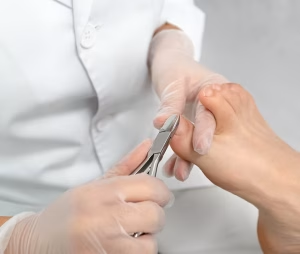
Nailcare and Toenail Cutting are simple techniques which help to promote good foot health. By looking after our feet and cutting our toe nails correctly we are able to reduce the likelihood of developing ingrowing toenails and athlete’s foot and catch other conditions, such as fungal nail infections, early.
Nail Surgery
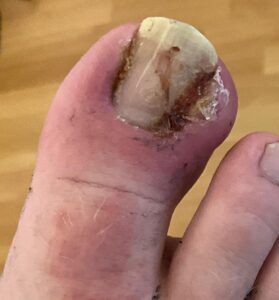
Nail surgery is a minor, routine procedure, performed by our Podiatrist Helen under local anaesthetic, to treat painful, ingrown, or damaged toenails by removing part (partial) or all (total) of the nail. A chemical (phenol) is often applied to prevent the nail from regrowing, providing a permanent solution. The procedure takes about 40 minutes, with a 6-12 week healing time
Ingrown Toenail
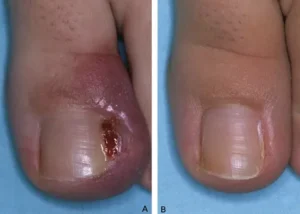
An ingrown Toenail is a common condition in which the corner or side of a toenail grows into the soft flesh. This is a painful condition producing redness, swelling and sometimes an infection too.
Athletes Foot
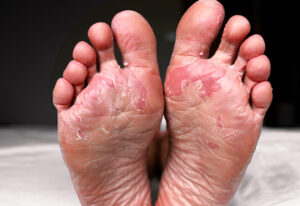
Athlete’s foot is a common fungal skin infection that usually affects the skin between the toes, although it can also affect the soles and sides of the feet. It may cause itching, redness, flaking, peeling skin, soreness, or cracking, and can become increasingly uncomfortable if left untreated.
Corns, Callus and Cracked Heels
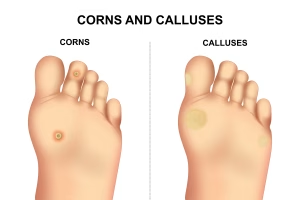
Corns and Callouses are thick, hardened layers of hard skin on specific areas of the foot. Contrary to popular belief, corns do not have a root.
Cracked Heels are the result of dry and thickened skin, sometimes with calluse’s around the edge of the heel. Sometimes cracked heels can be painful but not always.
Verruca’s, Advanced Swift Microwave Verruca Treatment
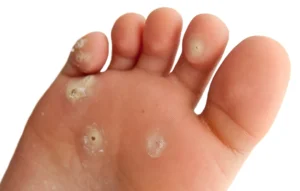
A Verruca is a viral infection of the skin by the human papilloma virus (HPV). The same virus causes warts to appear on other parts of the body. On the foot, because we keep treading on the area of infection, the soft fleshy wart remains flush with the skin.
Diabetic Foot Care
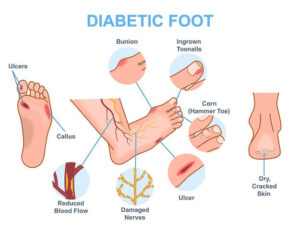
Diabetes can lead to a restricted blood supply to the feet resulting in cold, painful feet.
It is the restricted supply of blood which can result in feet being slow to heal and can quickly become infected.
Curacorn
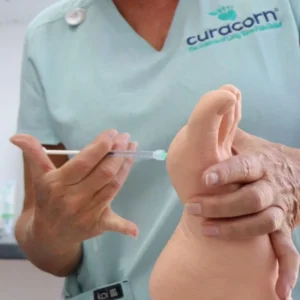
Curacorn® is a unique and innovative treatment using specialised gel injections to cushion ‘inside’ the skin to prevent painful pressure lesions such as corns and calluses, making it the perfect treatment for busy patients who find themselves having to return for regular/frequent treatments. Should you wish to be assessed for this treatment, you should book a “Standard Podiatry – Skin and Nail” appointment initially so Helen can assess you. It may not necessarily lead to a Curacorn treatment, if the issue can be treated in other ways.