Diabetic Foot Care:

What is Diabetic Foot Care?

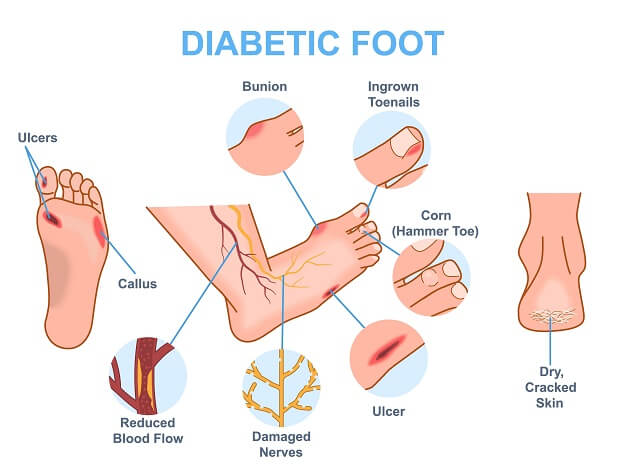
Diabetes can lead to a restricted blood supply to the feet resulting in cold, painful feet.It is the restricted supply of blood which can result in feet being slow to heal and can quickly become infected.

Why do I need Diabetic Foot Care?

Diabetes can lead to nerve damage in the feet and legs resulting in a loss of sensation. Any trauma or injury to the foot, for example a tight shoe causing a blister, may not be felt and could lead to more serious problems such as an ulcer.

How can you manage Diabetic foot Care?

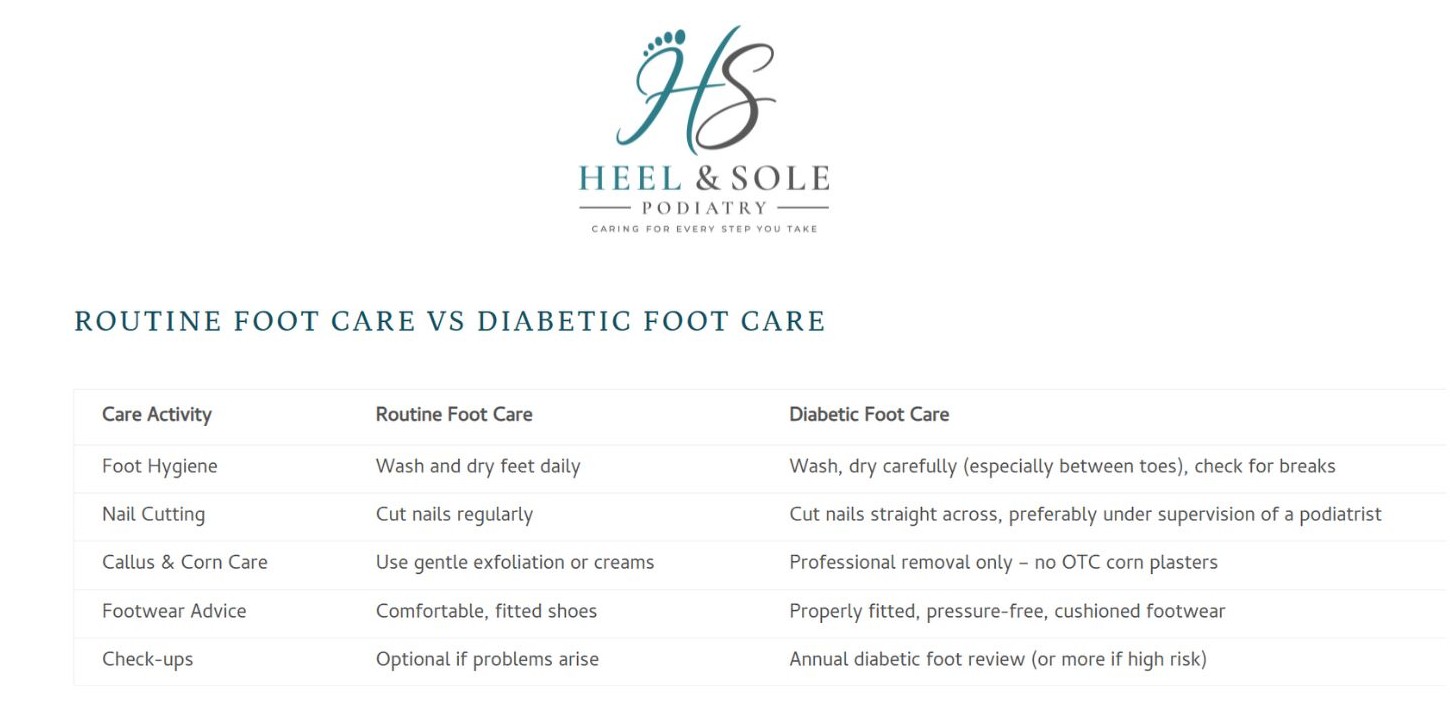
Regular appointments with Helen will ensure your feet are given the best possible care. Helen will ensure that your nails are cut correctly as well as ensuring that any corns, callus (hard skin on the feet) or cracked skin is attended to correctly. You should not attempt to cut corns and callus yourself or use ‘corn remedies’.  During your appointment with Helen you will be advised on what level of risk category you fall in. You will then be given appropriate advice on how to keep your feet healthy.
Frequently Asked Questions
Why is foot care important if I have diabetes?

Diabetes can reduce blood flow and damage nerves in your feet. This means injuries may go unnoticed and heal slowly, increasing the risk of infection, ulcers, or even amputation.

Look out for numbness, tingling, cold feet, changes in skin colour, wounds that don’t heal, and areas of hard skin or redness. These may all be early warning signs.

Regular check-ups are vital. Most people with diabetes should see a podiatrist at least once a year, though higher-risk individuals may need more frequent appointments.

Helen will assess your circulation and sensation, trim your nails properly, and treat any corns, callus, or cracked skin. You’ll also be advised on your personal risk category and given tips for daily foot care.

No. These can damage your skin, especially if you have reduced sensation. Always consult a podiatrist before using any foot treatment products.

Check your feet daily for cuts or changes, wear properly fitted shoes, moisturise dry skin (but not between the toes), and avoid walking barefoot.